

10 BJJ Training Tips That Actually Make a Difference
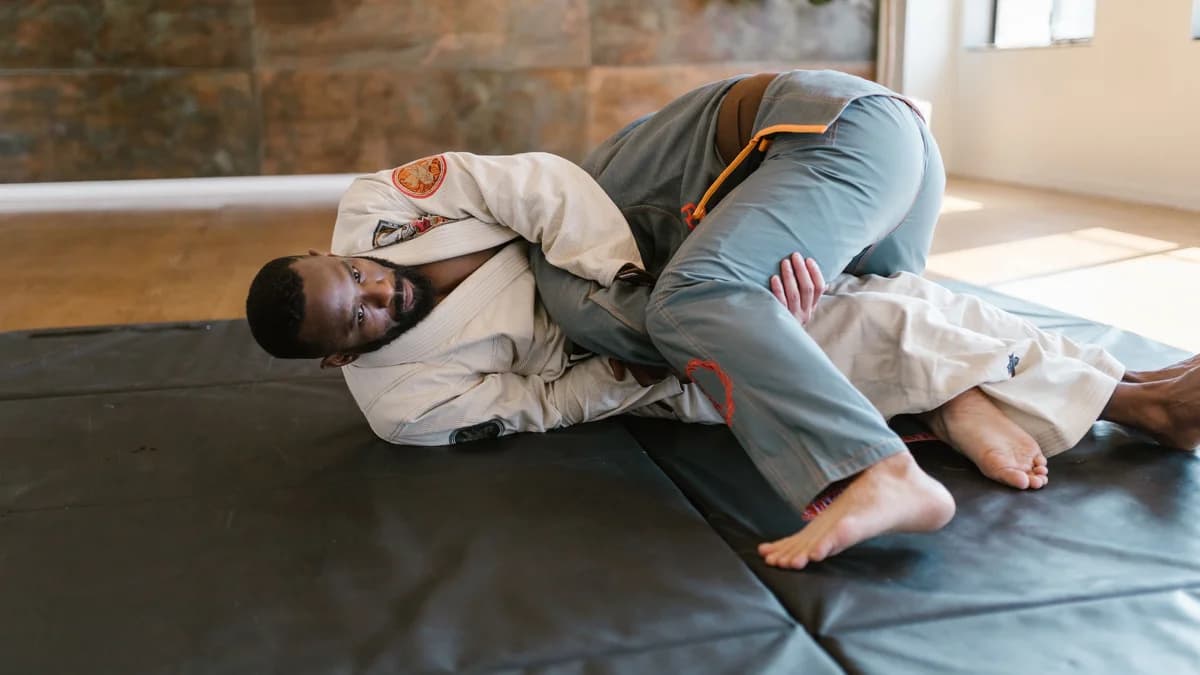
Most BJJ improvement advice is either too generic ("train hard, stay consistent") or too specific to be broadly applicable. These are the 10 things that make a consistent, measurable difference for practitioners across all levels.
1. Prioritize Escapes Over Attacks
Most beginners want to learn submissions first. This is backwards.
The majority of your rolling time — especially early in your training — will be spent in bad positions trying to survive. Drilling escapes from mount, back control, and side control until they become automatic gives you a reliable foundation. When you can escape consistently, you can experiment offensively without fear.
Escapes are also far less opponent-dependent than submissions. A good escape works against almost everyone. A specific submission setup often requires specific conditions.
2. Tap Early, Tap Often
Ego is the enemy of development in BJJ. The practitioners who tap immediately when caught — without trying to hold out — get more reps, avoid injury, and progress faster.
Every tap-and-reset is another learning repetition. Every time you hold out and get injured, you lose training days. The math is simple.
3. Use Specific Sparring
"Position sparring" — starting from a specific position with a specific goal — is more efficient for skill development than open sparring alone.
Examples:
- Start in your partner's guard; goal is to pass without getting submitted
- Start in mount; one person escapes, one person maintains and submits
- Start from back control; one person escapes, one person finishes
This creates concentrated reps of exactly the situations you need to improve in, rather than waiting for those positions to arise naturally during open rolls.
4. Have a Game Plan Before Rolling
Walking onto the mat without a plan produces random rolling. Instead, set a specific intention before each round:
- "I'm going to work my guard passing from standing today"
- "I want to get to back control every round"
- "I'm going to work my armbar from guard setups"
This doesn't mean you ignore what's available — it means you give the intentional objective priority when the opportunity arises.
5. Develop a Reliable A-Game
Having 10 techniques at 50% effectiveness is worse than having 3 techniques at 90% effectiveness. Deep mastery of a small number of high-percentage techniques creates genuine reliability.
Choose your best guard, your best guard pass, and your best 2–3 submissions. Drill these obsessively. Only expand once those are genuinely sharp.
6. Train With Better Partners Intentionally
When you only train with people at your level or below, you're not getting exposed to the responses that will challenge your game. Seeking rounds with higher-level training partners — even when it's uncomfortable — accelerates development faster than comfortable rolls.
You don't need to win these rounds. The point is exposure to higher-level reactions that force you to adapt.
7. Note What Gets You Every Time
After training, briefly note the specific submission, position, or transition that caught you — especially if it catches you repeatedly. These recurring holes in your game are your actual development priorities.
A specific recurring problem has a specific solution. Identifying it precisely lets you address it directly rather than vaguely "working on defense."
8. Compete Regularly
Even one tournament every 3–6 months transforms your training. Competition reveals weaknesses you don't know you have, creates specific goals to prepare for, and generates a different quality of learning than gym rolling.
The match environment produces intensity, adrenaline, and real stakes that cannot be fully replicated in training. Exposure to competition conditions is itself a trainable skill.
9. Manage Your Training Across the Week
Intensity management matters more as you train more days per week. Some principles:
- Not every session needs to be 100%. Technical drilling sessions, positional sparring with clear rules, and flow rolling all have their place alongside hard sparring.
- One or two hard sparring sessions per week is sufficient for most practitioners training 3–5 days. More hard days without adequate recovery produces diminishing returns and increases injury risk.
- Prioritize sleep. BJJ is physically and neurologically demanding. Inadequate sleep impairs both skill learning and physical recovery.
10. Film Yourself
Even occasionally, watching yourself on video reveals things you can't feel in the moment. Posture issues, predictable patterns, positions you end up in without realizing — these are visible on film and invisible from inside the experience.
You don't need elaborate setup. A phone propped against a bag during a round of positional sparring provides enough information to identify significant technical issues.
Frequently Asked Questions
How many days a week should I train BJJ to improve?
Three to four sessions per week is the sweet spot for most practitioners. It provides enough repetitions to build motor patterns while allowing adequate recovery. Training more days is fine if your body tolerates it, but intensity management becomes more important — not every session should be hard sparring.
Is drilling or sparring more important for BJJ improvement?
Both serve different purposes and neither replaces the other. Drilling builds technical precision and muscle memory for specific movements. Sparring develops timing, pressure-testing, and adaptability. The most effective training combines both — drill to build the skill, spar to refine it under pressure.
How do I stop gassing out during BJJ sparring?
Most gassing out in BJJ comes from muscle tension and resistance, not aerobic capacity. Relaxing during rolling — especially when in a bad position — conserves far more energy than any conditioning program. Focus on breathing continuously and avoiding unnecessary muscular tension before adding extra conditioning work.
Should beginners focus more on offense or defense in BJJ?
Defense first. The majority of rolling time as a beginner is spent in bad positions trying to survive. Learning to escape mount, side control, and back control reliably creates a foundation that makes everything else safer to develop. Strong escapes also allow you to take more offensive risks without getting finished.
How do I know what to work on in BJJ training?
Track what catches you repeatedly in sparring. Recurring submissions, positions, or transitions that catch you consistently are your real development priorities. A pattern that catches you three times in a month has a specific solution — identify it precisely and address it directly rather than vaguely 'working on defense.'
Does competing make you better at BJJ?
Yes — competition accelerates development in ways that gym training cannot replicate. It reveals weaknesses you don't know you have, creates specific preparation goals, and exposes you to real-stakes intensity. Even one tournament every few months produces a noticeably different quality of learning than training alone.
None of these are secret. They require consistent application rather than genius — which is true of most things in BJJ.