

Gi vs No-Gi BJJ: Key Differences & Which to Start With
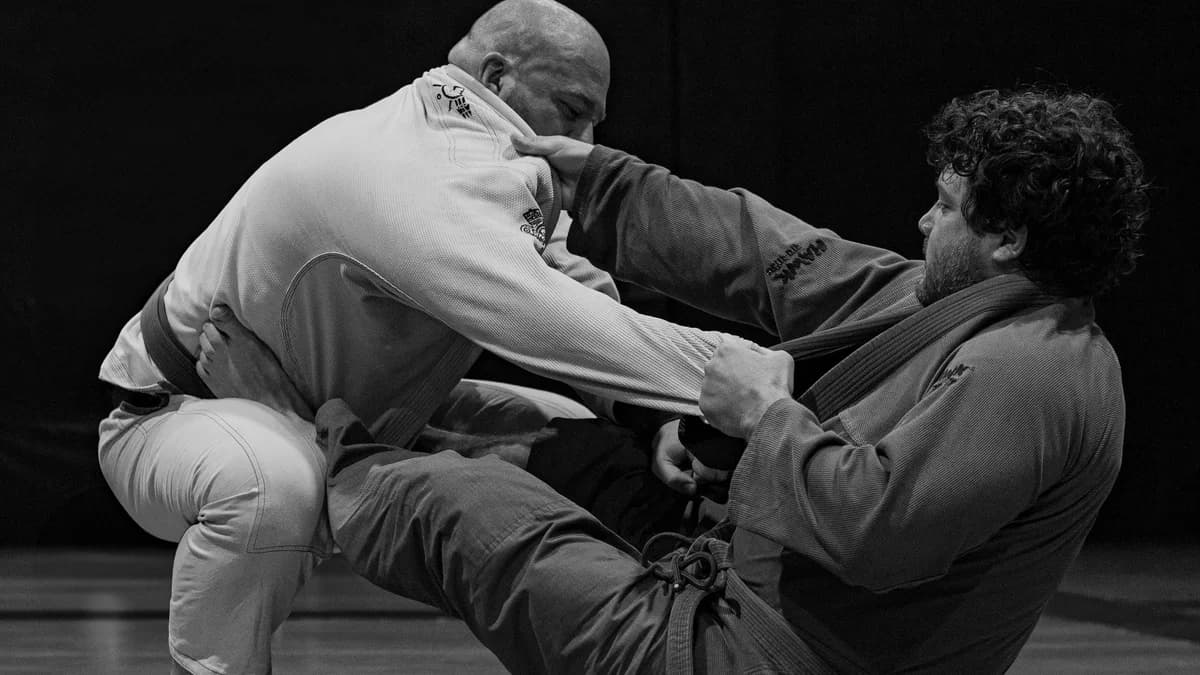
One of the first decisions a new BJJ practitioner faces — or a question that comes up when returning after a break — is whether to train in the gi, no-gi, or both. The answer depends on your goals, but understanding the differences helps you make an informed choice rather than just following gym culture.
The Basic Difference
Gi (kimono): You wear a traditional BJJ uniform — jacket, pants, and belt. Gripping the fabric of your opponent's gi is central to the game.
No-gi: You wear shorts and a rash guard. No fabric grips. Gripping is limited to the body itself — wrists, ankles, neck, and limbs.
This single difference creates two distinct technical environments.
How the Games Differ
Pace
No-gi is generally faster. Without fabric grips, clinch control is harder to maintain, and transitions between positions happen more quickly. Gi BJJ tends to be slower and more methodical — a good gi player can slow the game down using lapel and sleeve grips to control pace.
Submissions
The available submission set overlaps significantly, but there are differences:
- Gi-specific: collar chokes (baseball bat choke, bow-and-arrow, cross collar), lapel guard systems, Ezekiel choke
- No-gi dominant: heel hooks (outside heel hook, inside heel hook), Danaher-style leg lock systems, more accessible toe holds
- Both: armbars, triangles, rear naked choke, Kimura, guillotine
Heel hooks are the most significant technical divergence. They are widely used in high-level no-gi competition and increasingly common in advanced no-gi training, but are either banned or heavily restricted in most gi competition due to injury risk.
Guards
Gi: Spider guard, lasso guard, de la Riva, worm guard, lapel guard — all use gi grips and are not directly applicable in no-gi.
No-gi: Rubber guard, butterfly guard, x-guard, leg entanglement systems — these emphasize body-based control.
Some guards translate well (closed guard, half guard, single leg x); others are format-specific.
Takedowns and Entries
No-gi tends to favor wrestling-based takedowns (double leg, single leg) since there are no lapel or sleeve grips to play judo-style. Gi allows judo-influenced throws using the collar and sleeve, as well as gi-grip guard pulls.
Culture Differences
Gi BJJ carries more of the traditional martial arts heritage — bowing, gi etiquette, belt ceremony, and the aesthetic of wearing a kimono connect it to the Japanese roots of the art.
No-gi is more athletic-sport in feel, closer to wrestling culture. The dress code is casual; the vibe in many gyms is more intense and competitive.
Neither is "better" — it's largely a matter of personality and what you're training for.
Which to Start With?
Start with gi if:
- Your primary goal is self-defense (gi grip training builds strong hand fighting habits)
- You want the richest technical vocabulary — gi BJJ has the widest range of techniques, and most of them transfer to no-gi; the reverse is less true
- You want to compete on the IBJJF circuit, which is primarily gi
Start with no-gi if:
- Your primary goal is MMA (no-gi translates more directly)
- You want faster pace and a more athletic training environment
- Your gym only offers no-gi
Train both if:
- You can — this is the best long-term approach. The skills transfer in both directions and the complete player is strongest in both formats.
The Transfer Question
A common debate: does gi training transfer to no-gi, and vice versa?
Gi → no-gi: Generally yes, with adjustment. Positional concepts, submissions (minus collar chokes), and defensive habits transfer well. Gi players going no-gi usually need to update their guard systems and improve their wrestling.
No-gi → gi: Also yes, but the adjustment can be harder. Players used to no-gi often struggle with pace management and the gi grip game initially. The added dimension of collar and sleeve control requires new learning.
The consensus among most experienced practitioners: training gi makes you a more technical grappler overall, while training no-gi makes you faster and more dynamic. Both make you better at the other.
What Elite Competition Shows
The transfer data from high-level competition supports the idea that gi-first builds a more complete foundation. Roger Gracie — widely considered the greatest gi competitor of all time — won ADCC (the premier no-gi event) multiple times. André Galvão built his dominance in gi competition before becoming a six-time ADCC champion. Nicholas Meregali, one of the most decorated gi competitors of the last decade, transitioned to no-gi in 2022 and immediately reached the ADCC final.
The reverse pattern is less common. Elite no-gi specialists who have trained primarily without the gi tend to struggle in gi competition — the grip game, pace management, and collar choke defense are genuinely hard to develop without consistent gi training.
This isn't a rule, and there are exceptions. But the pattern across multiple generations of elite competitors suggests that gi training builds a technical base that translates, while no-gi specialisation leaves more gaps when the gi is put on.
My Experience Training Both
I came to BJJ through MMA — I trained striking for a couple of years before switching over. When I made the move, I started training both gi and no-gi from the beginning, and I still do.
If I'm honest, I enjoy no-gi more. The pace suits me — it's faster physically and mentally. There's less setup time, more scrambling, and the leg lock game adds a dimension that I find genuinely interesting.
That said, gi training has made me more careful and technical in ways that carry over everywhere. When you can't muscle out of a grip or outpace someone, you're forced to be precise. Details that you can skip in no-gi — framing at the right angle, breaking grips correctly, controlling wrist positioning — become unavoidable in the gi. That attention to detail shows up in your no-gi game whether you want it to or not.
My honest recommendation: train both from the start if your gym allows it. Don't wait until you feel "ready" for one or the other.
Is gi or no-gi BJJ better for beginners?
Most academies recommend starting with gi because the slower pace and fabric grips give you more time to think and build fundamental habits. That said, if your goal is MMA or your gym only offers no-gi, starting there is perfectly fine.
Does gi training transfer to no-gi?
Yes — positional concepts, submissions, and defensive habits mostly transfer. The main adjustment for gi players going no-gi is updating guard systems that rely on fabric grips and improving wrestling for takedowns.
Does no-gi training transfer to gi?
It transfers, but the adjustment is harder. Players used to no-gi often struggle with pace management and the gi grip game initially. The added dimension of collar and sleeve control requires new learning, which is why most experienced practitioners say gi-first builds a more complete foundation.
Should I train both gi and no-gi?
Yes, if you can. The skills reinforce each other — gi makes you more technical and detail-oriented, no-gi makes you faster and more explosive. Training both produces a more complete grappler than specialising in one format only.
Are heel hooks allowed in gi BJJ?
No — heel hooks are banned or heavily restricted in most gi competitions, including IBJJF events, due to injury risk. They are widely used in advanced no-gi competition and are one of the most significant technical differences between the two formats.
Bottom Line
Gi and no-gi are two versions of the same sport with meaningfully different technical environments. Neither is superior. The most complete grapplers train both — gi for precision and technical depth, no-gi for speed and athleticism. If you're starting out and have a choice, gi gives you a richer foundation to build from; if you're training for MMA, prioritise no-gi but don't neglect the gi entirely.