

How Long Does It Take to Get a Blue Belt in BJJ?
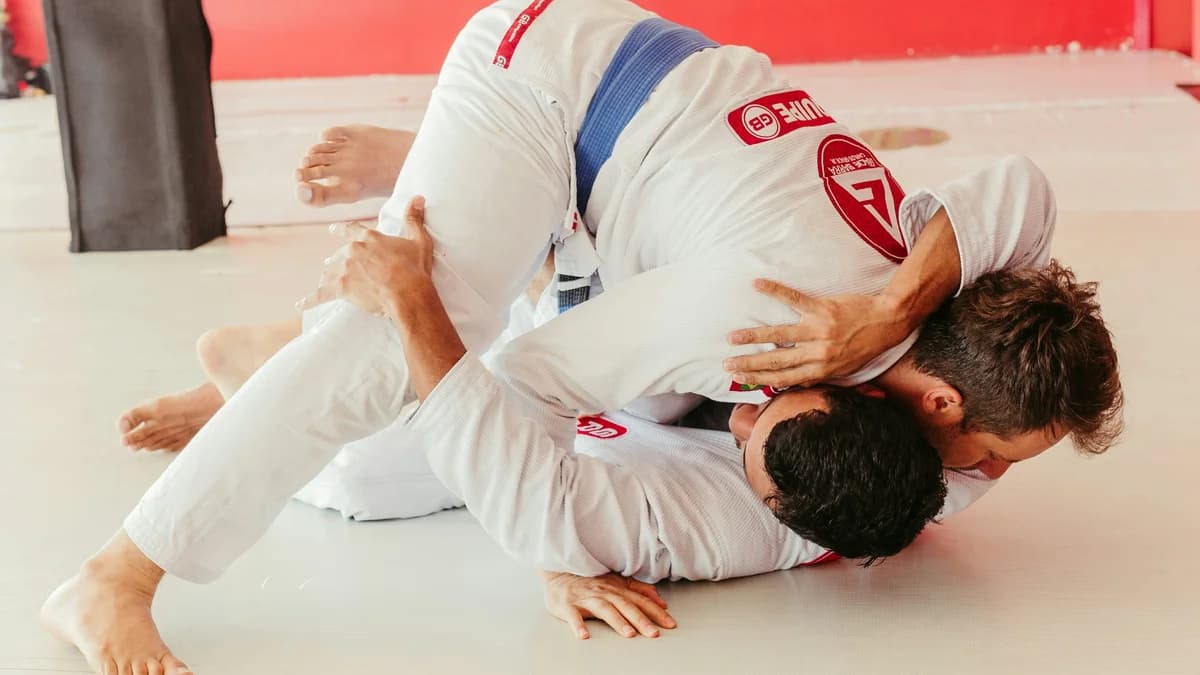
The blue belt is the first promotion in Brazilian Jiu-Jitsu and, for many practitioners, the hardest to earn — not because it requires the most skill, but because it's the stage where most people quit. Here's what the white-to-blue timeline looks like realistically, what your instructor is looking for, and how to accelerate your progress.
The Typical Timeline
For most adults starting from zero, the white-to-blue journey takes 1 to 2 years of consistent training (3–5 times per week). Some practitioners get promoted in under a year; others spend 3 or more years at white belt.
There is no standard — every instructor and academy is different. What matters most is demonstrated ability, not a calendar.
The IBJJF requires a minimum age of 16 for the adult blue belt. Practitioners younger than 16 follow the kids/teens system with its own belt structure.
What Instructors Are Looking For
Most instructors don't promote based on passing a test or completing a curriculum checklist. They watch you roll. What they want to see at blue belt level:
Foundational technical knowledge:
- Competency in the basic positions: mount, side control, back control, guard
- Ability to escape bad positions with regularity
- At least one or two reliable submissions (armbar, rear naked choke, triangle, or similar)
- A basic passing game from standing and on the knees
Ability in live rolling:
- Can you hold your own against other white belts?
- Do you roll with control and without spazzing (dangerous, uncontrolled movement)?
- Are you improving visibly over months?
Attitude and commitment:
- Consistent attendance
- Willingness to tap and learn
- Positive contribution to the gym environment
The last point matters more than many people expect. An instructor is not just evaluating your technique — they're deciding whether to put their name behind you as a representative of the art.
Why Some People Wait Longer
Inconsistent training: A white belt who attends twice a week will typically take twice as long as one who attends four times a week. Frequency compounds.
No competition experience: Many instructors use competition as a benchmark. If you've never tested your skills under pressure, your instructor has less data to work with.
Defensive or tentative rolling: If you survive rather than engage, your instructor may see potential but not enough assertiveness to promote.
Sandbagging: Occasionally a practitioner genuinely isn't ready and needs more time. This is more common than people like to admit at the white belt stage.
Why You Shouldn't Rush It
The white belt stage is when your fundamental movement patterns are being built. If you're promoted too quickly — before these foundations are solid — you'll spend years at blue belt struggling with basics that should have been drilled as a white belt.
Getting promoted "late" at white belt often means you arrive at blue belt in genuinely good shape, which makes the next journey (blue to purple, the longest gap for most people) more productive.
How to Progress Faster
- Train more. Three sessions minimum per week; four to five is ideal.
- Compete. Even one local tournament a year gives your instructor valuable information about your game under pressure.
- Ask questions after class. Instructors remember the students who are curious and engaged.
- Drill the basics obsessively. Escapes, guard retention, and the closed guard are the foundation of everything — don't neglect them chasing flashy techniques.
- Tap early and often. The faster you tap, the more reps you get. Ego-driven resistance to tapping slows learning dramatically.
The Blue Belt Blues Are Real
Blue belt has the highest attrition rate in BJJ. Many practitioners reach this first milestone and then quit — sometimes because the novelty has worn off, sometimes because they plateau and aren't sure how to break through.
If you're aware of this before it happens, you can prepare for it. The plateau after blue belt promotion is normal. Training through it — rather than quitting — is what separates the practitioners who eventually reach black belt from the majority who don't.
How long does it take to get a blue belt in BJJ?
Most adults who train consistently (3–5 times per week) reach blue belt in 1 to 2 years. Some get promoted in under a year; others spend 3 or more years at white belt. Frequency and quality of training matter far more than time elapsed.
What do instructors look for before promoting to blue belt?
Instructors primarily watch you roll. They want to see competency in basic positions, the ability to escape regularly, at least one or two reliable submissions, and controlled rolling without dangerous spazzing. Consistent attendance and a good attitude also factor in.
Can you get a BJJ blue belt in less than a year?
Yes, it happens — especially for people who train very frequently, have prior grappling experience, or compete regularly. It's uncommon but not unheard of. Most instructors won't promote before the student is genuinely ready regardless of time on the mat.
Why do so many people quit at blue belt?
Blue belt has the highest attrition rate in BJJ. After the initial excitement of the first promotion wears off, many practitioners plateau and aren't sure how to break through. The novelty is gone but the skill level isn't yet high enough to feel effortless — this is the window where most people stop.
Does competing help you get promoted faster in BJJ?
Often yes. Competition gives your instructor direct evidence of how your skills hold up under pressure, which they may not see in normal training. Even one local tournament a year is enough to make a difference in many academies.
Summary
Getting a blue belt in BJJ takes most adults 1–2 years of consistent training. Focus on fundamentals, compete at least occasionally, and trust the process. The promotion will come when you're ready — and if your instructor is good, that timing will serve you well.