

IBJJF Weight Classes: Complete Guide for Gi & No-Gi
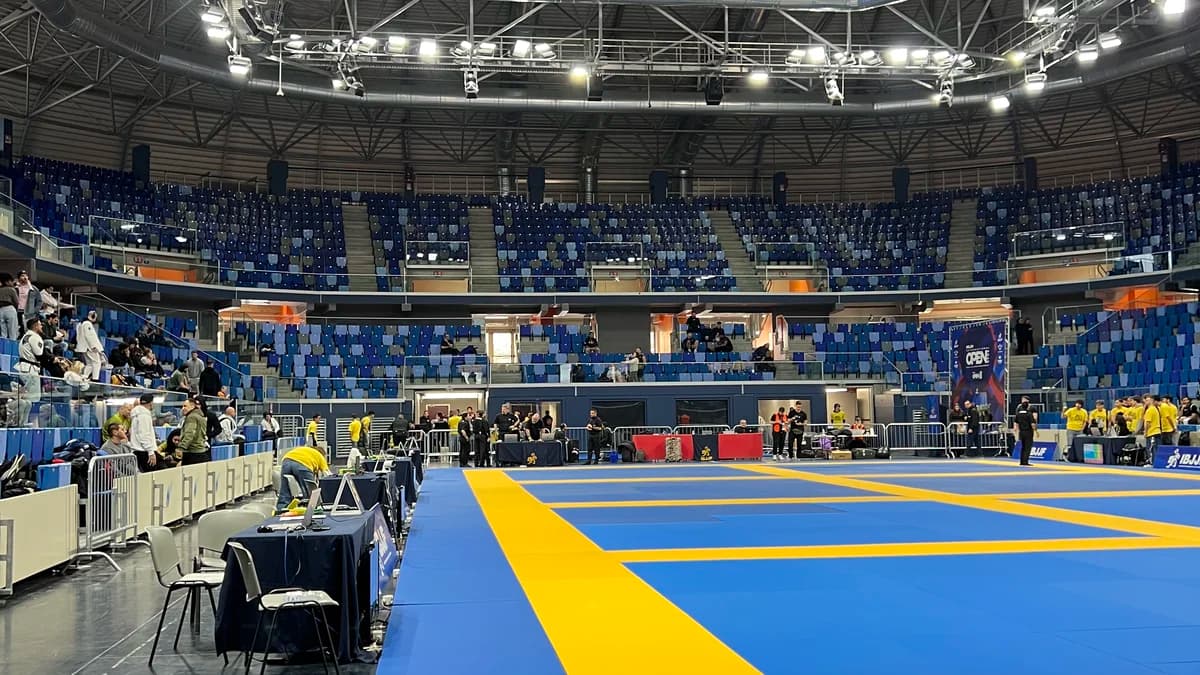
The International Brazilian Jiu-Jitsu Federation (IBJJF) uses a standardized set of weight classes across its tournaments worldwide — the World Championship, Pan American, European, and hundreds of local events. Understanding the categories before you register can mean the difference between a competitive bracket and getting crushed by someone 10kg heavier.
IBJJF Adult Male Weight Classes
No-gi limits are roughly 2–3 kg lower than gi limits to account for the absent uniform.
| Division | 🥋 Gi | 🤼 No-Gi |
|---|---|---|
| Rooster | Up to 57.5 kg (126.8 lbs) | Up to 55.5 kg (122.4 lbs) |
| Light Feather | Up to 64 kg (141.1 lbs) | Up to 61.5 kg (135.6 lbs) |
| Feather | Up to 70 kg (154.3 lbs) | Up to 67.5 kg (148.8 lbs) |
| Light | Up to 76 kg (167.6 lbs) | Up to 73.5 kg (162.0 lbs) |
| Middle | Up to 82.3 kg (181.4 lbs) | Up to 79.5 kg (175.3 lbs) |
| Medium Heavy | Up to 88.3 kg (194.7 lbs) | Up to 85.5 kg (188.5 lbs) |
| Heavy | Up to 94.3 kg (207.9 lbs) | Up to 91.5 kg (201.7 lbs) |
| Super Heavy | Up to 100.5 kg (221.6 lbs) | Up to 97.5 kg (215.0 lbs) |
| Ultra Heavy | Over 100.5 kg (221.6+ lbs) | Over 97.5 kg (215.0+ lbs) |
IBJJF Adult Female Weight Classes
Female competitors have 8 divisions — one fewer than men. The top category is Super Heavy (no upper limit); there is no Ultra Heavy for women.
| Division | 🥋 Gi | 🤼 No-Gi |
|---|---|---|
| Rooster | Up to 48.5 kg (107.0 lbs) | Up to 46.5 kg (102.5 lbs) |
| Light Feather | Up to 53.5 kg (117.9 lbs) | Up to 51.5 kg (113.5 lbs) |
| Feather | Up to 58.5 kg (129.0 lbs) | Up to 56.5 kg (124.6 lbs) |
| Light | Up to 64 kg (141.1 lbs) | Up to 61.5 kg (135.6 lbs) |
| Middle | Up to 69 kg (152.1 lbs) | Up to 66.5 kg (146.6 lbs) |
| Medium Heavy | Up to 74 kg (163.1 lbs) | Up to 71.5 kg (157.6 lbs) |
| Heavy | Up to 79.3 kg (174.8 lbs) | Up to 76.5 kg (168.7 lbs) |
| Super Heavy | Over 79.3 kg (174.8+ lbs) | Over 76.5 kg (168.7+ lbs) |
IBJJF Juvenile Male Weight Classes
Juvenile division at IBJJF is for competitors aged 16–17. Limits are lower than adult across the board.
| Division | 🥋 Gi | 🤼 No-Gi |
|---|---|---|
| Rooster | Up to 53.5 kg (117.9 lbs) | Up to 51.5 kg (113.5 lbs) |
| Light Feather | Up to 58.5 kg (129.0 lbs) | Up to 56.5 kg (124.6 lbs) |
| Feather | Up to 64 kg (141.1 lbs) | Up to 61.5 kg (135.6 lbs) |
| Light | Up to 69 kg (152.1 lbs) | Up to 66.5 kg (146.6 lbs) |
| Middle | Up to 74 kg (163.1 lbs) | Up to 71.5 kg (157.6 lbs) |
| Medium Heavy | Up to 79.3 kg (174.8 lbs) | Up to 76.5 kg (168.7 lbs) |
| Heavy | Up to 84.3 kg (185.8 lbs) | Up to 81.5 kg (179.7 lbs) |
| Super Heavy | Up to 89.3 kg (196.9 lbs) | Up to 86.5 kg (190.7 lbs) |
| Ultra Heavy | No maximum | No maximum |
IBJJF Juvenile Female Weight Classes
Juvenile females also have 8 divisions, with Super Heavy carrying no upper weight limit.
| Division | 🥋 Gi | 🤼 No-Gi |
|---|---|---|
| Rooster | Up to 44.3 kg (97.7 lbs) | Up to 42.5 kg (93.7 lbs) |
| Light Feather | Up to 48.3 kg (106.5 lbs) | Up to 46.5 kg (102.5 lbs) |
| Feather | Up to 52.5 kg (115.7 lbs) | Up to 50.5 kg (111.3 lbs) |
| Light | Up to 56.5 kg (124.6 lbs) | Up to 54.5 kg (120.2 lbs) |
| Middle | Up to 60.5 kg (133.4 lbs) | Up to 58.5 kg (129.0 lbs) |
| Medium Heavy | Up to 65 kg (143.3 lbs) | Up to 62.5 kg (137.8 lbs) |
| Heavy | Up to 69 kg (152.1 lbs) | Up to 66.5 kg (146.6 lbs) |
| Super Heavy | No maximum | No maximum |
Kids Divisions
For competitors younger than 15, IBJJF uses a separate Kids weight chart. These divisions are based on the athlete's birth year, which means the applicable categories shift every January — a child who moved up a bracket at the end of one year may find themselves in a different one at the start of the next. The weight limits also tend to be updated more frequently than the adult or juvenile tables.
For this reason, always download the weight chart directly from the specific tournament page before registering your child. Do not rely on any third-party guide (including this one) for Kids weight limits.
Masters Divisions
Masters divisions follow the same weight classes as adults but are divided by age:
- Masters 1: 30 years and older
- Masters 2: 36 years and older
- Masters 3: 41 years and older
- Masters 4: 46 years and older
- Masters 5: 51 years and older
- Masters 6: 56 years and older
- Masters 7: 61 years and older
Masters competitors can also enter the adult division if they meet the age requirement from the other side.
The Absolute Division
Every IBJJF event includes an absolute division — open weight, where all competitors regardless of weight class can enter. This is separate from the weight division and requires an additional registration fee.
The absolute is the most prestigious division at major events. Historically it's dominated by heavier athletes, but technical giants at lighter weights (like Mikey Musumeci or Caio Terra) have made their names by winning it against much larger opponents.
How Weight Is Measured
IBJJF weighs competitors with the gi on for gi divisions and without gi for no-gi divisions. There is no allowance for the gi weight — if you're registered at featherweight (70 kg), you need to make 70 kg with your gi on.
A standard competition gi weighs roughly 1.5–2 kg, so your walking weight for a gi division needs to be well under the limit.
For no-gi, you weigh in in shorts and rash guard, which adds very little weight.
When to Weigh In
At most IBJJF events, weigh-ins happen on the day of competition, in the morning before your division runs. There is no same-day rehydration window — you step on the scale and compete shortly after.
This makes extreme weight cutting less common in BJJ than in MMA or wrestling, though it still happens.
Gi Weight Allowance at Some Events
Some events — particularly smaller local ones — allow a small gi weight allowance (typically 0.5 kg). Always check the specific event rules before cutting weight.
How to Choose Your Weight Class
The simplest advice: compete at your natural walking weight. Cutting weight in BJJ offers less advantage than in sports with rehydration windows, and the risk of being weak and depleted on competition day is real.
If you're borderline between two classes:
- Consider which class has the more competitive bracket (smaller is not always easier)
- Factor in whether you're in gi or no-gi (gi adds weight)
- Talk to your instructor about your options
Other Federations' Weight Classes
Other circuits don't use IBJJF divisions. AJP uses round kilogram limits and weighs you in without the gi, ADCC has only five male and three female classes, and US circuits like NAGA and Grappling Industries work in pounds. See BJJ weight classes by federation for all of them side by side.
Frequently Asked Questions
What is the lightest IBJJF weight class for adults?
Rooster — up to 57.5 kg (126.8 lbs) with gi, or 55.5 kg (122.4 lbs) no-gi for adult males. For adult females the lightest class is also Rooster: up to 48.5 kg (107.0 lbs) gi, or 46.5 kg (102.5 lbs) no-gi.
Are IBJJF no-gi weight classes different from gi?
Yes. No-gi limits are roughly 2–3 kg lower than the equivalent gi division because athletes weigh in without a uniform. For example, adult male Featherweight is 70 kg with gi but 67.5 kg in no-gi.
How does IBJJF weigh competitors for gi events?
Athletes step on the scale fully dressed in their competition gi. There is no gi-weight allowance — if you are registered at Featherweight (70 kg), you must make 70 kg with your gi on. A standard competition gi weighs 1.5–2 kg, so your walking weight needs to be well under the limit.
Is there a female Ultra Heavy division in IBJJF?
No. Female competitors have 8 divisions — one fewer than men. The top category for women is Super Heavy, which has no upper weight limit. There is no Ultra Heavy for females in either gi or no-gi.
What age is the IBJJF juvenile division?
The juvenile division covers competitors aged 16–17. Juvenile weight limits are lower than adult limits across all divisions.
What is the IBJJF absolute division?
The absolute (open weight) division allows competitors to enter regardless of their weight class. It requires a separate registration fee and runs in addition to the weight division. It is open to all weights and is considered one of the most prestigious divisions at major events.
Summary
IBJJF weight classes are consistent across all major events, which makes planning straightforward once you know where you land. The key practical points: weigh in with your gi on (for gi events), don't cut aggressively without a rehydration window, and consider the absolute division for extra experience once you're comfortable competing.