

What Is a Coral Belt in BJJ? The Rarest Rank Explained
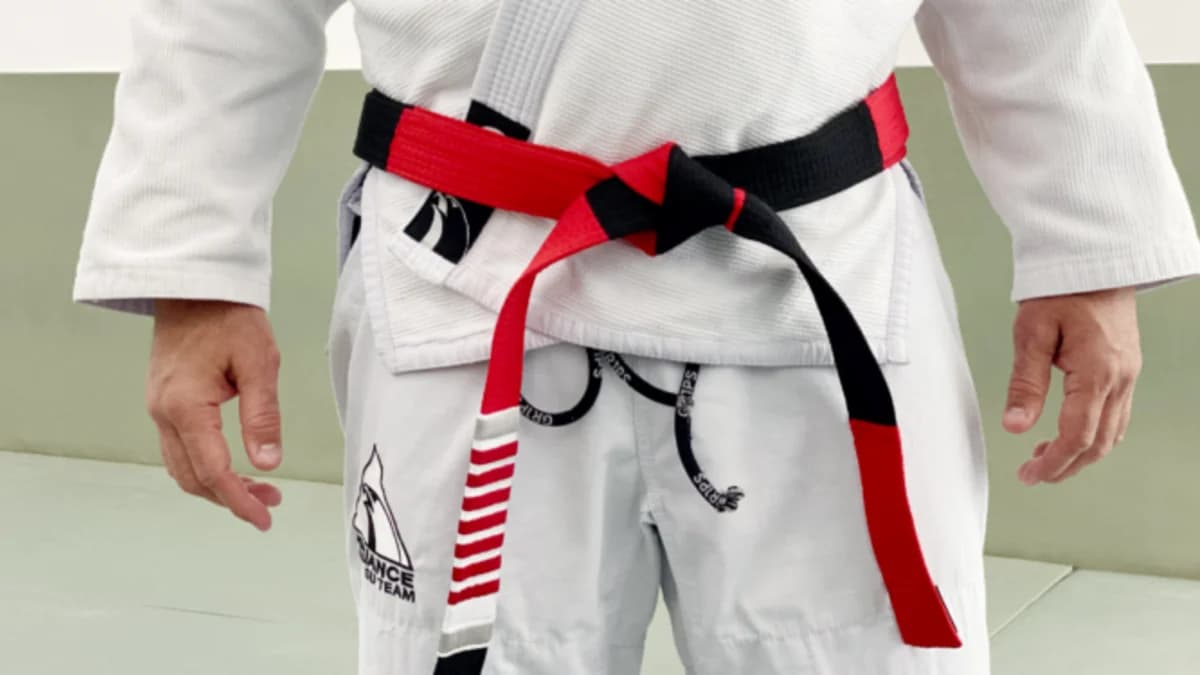
The coral belt is one of the rarest ranks in Brazilian Jiu-Jitsu — rarer than a black belt by an enormous margin. If you've seen one at a seminar or tournament and wondered what it means, here's the full explanation.
What Is the Coral Belt?
In BJJ's belt hierarchy, "coral belt" refers to two distinct high ranks beyond 6th degree black belt:
- Red/Black Coral Belt: the 7th degree, awarded to black belts who have reached this level after decades of contribution to BJJ
- Red/White Coral Belt: the 8th degree, the next stage above the red/black
Both are striped — red and black for the 7th degree, red and white for the 8th — which is why they're called coral belts. The combination of colors creates a distinctive striped pattern unlike any lower rank.
How Do You Earn a Coral Belt?
You don't pursue a coral belt — it is awarded over time to black belts who have dedicated their lives to BJJ through:
- Decades of continued training and teaching
- Significant contribution to the growth and spread of the art
- Mentorship of successful practitioners
- Sustained involvement in competition and the BJJ community
The IBJJF sets minimum age requirements for these ranks:
- 7th degree (red/black coral belt): minimum age 49, minimum 7 years at 6th degree (31 years as a black belt in total)
- 8th degree (red/white coral belt): minimum age 56, minimum 7 years at 7th degree
These are not tests you can pass. They are recognitions of a lifetime of work.
Who Has a Coral Belt?
Coral belts are held by a small number of BJJ pioneers and master-level instructors worldwide. Many of them trained directly under the founding generation of the art and have taught thousands of practitioners over careers spanning 30–40+ years.
Notable coral belt holders have included figures like Rigan Machado, Romero "Jacaré" Cavalcanti, and various other high-level masters who played key roles in BJJ's global spread from Brazil in the 1980s and 1990s.
The Red Belt Above Coral
Above the coral belts are the 9th and 10th degree red belts — the absolute highest ranks in BJJ. The IBJJF sets a minimum age of 66 for the 9th degree, and the 10th degree was given only to the five Gracie brothers who founded the art: Carlos, Oswaldo, George, Gastão and Hélio.
Why Are Coral Belts So Rare?
The math is simple: you need 31 years as a black belt before a coral belt is even possible under IBJJF rules, and age minimums mean you need to have started your BJJ journey young to reach it before very old age.
Additionally, coral belts are not self-awarded. They require recognition from the broader community of high-ranking practitioners. There is no institution that processes coral belt applications — it happens through acknowledgment, affiliation, and consensus among the senior-most members of the art.
What Does Seeing a Coral Belt Mean?
If you see someone wearing a coral belt at an academy or event, you're looking at someone who has contributed to BJJ for 30–40+ years and has been recognized by the community as a master of the art. Training with one — even briefly at a seminar — is a notable experience.
Frequently Asked Questions
What is a coral belt in BJJ?
The coral belt refers to two high ranks above 6th degree black belt: the red/black coral belt (7th degree) and the red/white coral belt (8th degree). Both have distinctive striped patterns that give them the coral belt name, and both are among the rarest ranks in martial arts.
How rare is a coral belt in BJJ?
Extremely rare. Under IBJJF rules you need 31 years as a black belt before the 7th degree, with minimum ages of 49 for the red/black belt and 56 for the red/white belt. Combined with the requirement for decades of contribution and community recognition, there are only a handful of coral belt holders worldwide.
How do you earn a coral belt in BJJ?
You don't pursue it — it is awarded over time through decades of training, teaching, and contribution to BJJ's growth. IBJJF sets minimum time requirements at each degree (at least 7 years between degrees), but the actual award comes through recognition from the broader senior community, not a test you can pass.
What comes after the coral belt in BJJ?
Above the coral belts (7th and 8th degree) are the 9th and 10th degree red belts — the highest ranks in BJJ. The 9th degree requires a minimum age of 66 and 10 years at red/white; the 10th degree was given only to the five Gracie brothers who founded the art.
Is a coral belt higher than a black belt?
Yes — significantly higher. The rank progression goes: black belt (1st–6th degree), coral belt (7th degree red/black, 8th degree red/white), then red belt (9th–10th degree). Most black belts will never reach coral belt level. It represents 30–40+ years of active contribution to the art.
The coral belt is a reminder that BJJ is a young enough art that its pioneers are still alive and still on the mat.