

What Is Grappling? BJJ vs Wrestling vs MMA Explained
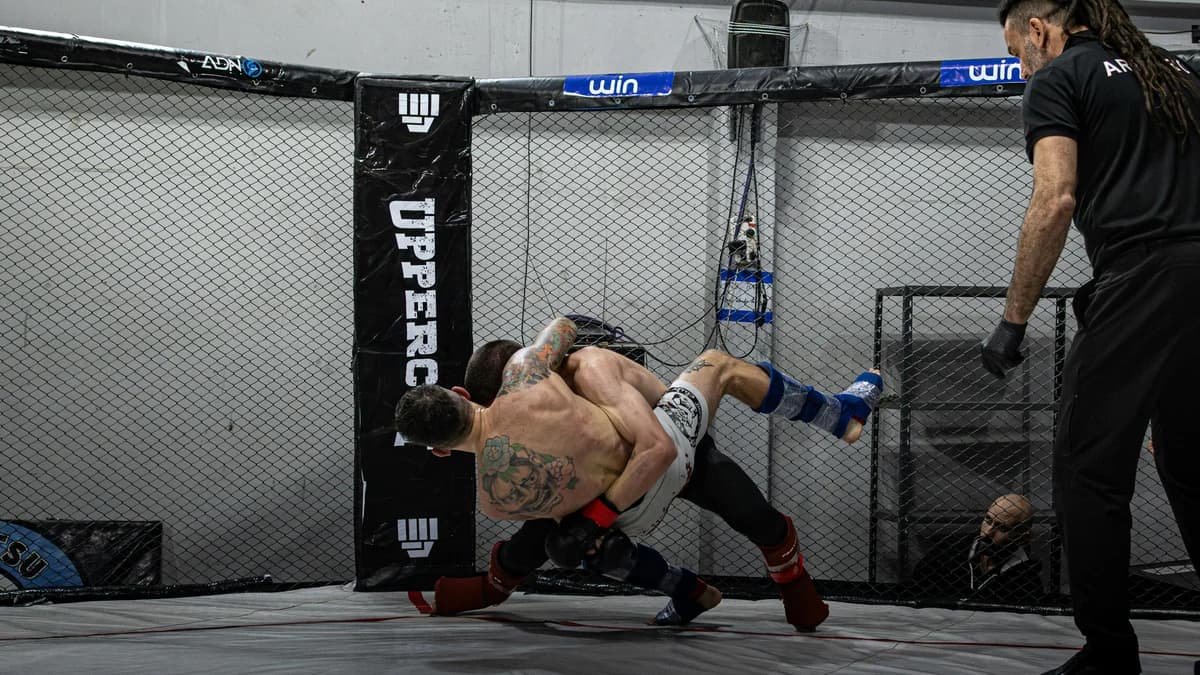
Grappling refers to a category of combat sports and martial arts focused on controlling, takedown, and submitting an opponent using holds, throws, and ground techniques — without striking. If you've heard the term and wondered where Brazilian Jiu-Jitsu fits, or how grappling differs from wrestling or MMA, this article breaks it down.
The Simple Definition
Grappling is any form of close-range combat that uses clinching, throws, takedowns, joint locks, and chokes to control or defeat an opponent. It explicitly excludes punches, kicks, and other strikes.
In practice, grappling is an umbrella term that covers several distinct disciplines:
- Brazilian Jiu-Jitsu (BJJ) — focuses primarily on ground fighting and submissions
- Wrestling — emphasizes takedowns and top control; submissions are not a primary goal
- Judo — focuses on throws and takedowns; ground work (ne-waza) is limited in competition
- Sambo — Russian hybrid combining judo throws with wrestling and BJJ-style leg locks
- Catch wrestling — a historically significant Western grappling style emphasizing submissions
How Grappling Differs from Striking
The most fundamental division in combat sports is between grappling and striking:
| Grappling | Striking | |
|---|---|---|
| Primary tools | Holds, throws, chokes, joint locks | Punches, kicks, elbows, knees |
| Range | Close (clinch and ground) | Mid to long range |
| Examples | BJJ, wrestling, judo | Boxing, Muay Thai, karate |
MMA (Mixed Martial Arts) combines both — which is why grappling skill has become essential for any serious MMA competitor. The ability to control where a fight takes place (standing vs. on the ground) is a decisive advantage.
What Is Submission Grappling?
Submission grappling (also called "no-gi grappling" or just "sub grappling") is grappling competed without a traditional uniform, with the explicit goal of forcing a tap via joint lock or choke. This distinguishes it from wrestling, where you win by controlling your opponent on the ground (pinning) rather than submitting them.
BJJ can be competed in gi or no-gi. No-gi BJJ is essentially submission grappling — and the two terms are often used interchangeably, though there are technical and ruleset differences.
BJJ as a Grappling Art
Brazilian Jiu-Jitsu is the most submission-focused grappling art in widespread practice today. Its key distinguishing features:
- Extensive ground fighting vocabulary (guard positions, sweeps, submissions from bottom)
- The ability to fight effectively off the back — a position most other grappling arts treat as a loss
- A deep submission catalog including armbars, triangles, rear naked chokes, leg locks, and more
- A proven effectiveness record in MMA and self-defense contexts
The Gracie family's early challenge matches in Brazil, and Royce Gracie's performance at the first UFC events in the early 1990s, established BJJ's reputation as a uniquely effective grappling system.
Wrestling vs. BJJ
| Wrestling | BJJ | |
|---|---|---|
| Primary goal | Takedown and control | Submission |
| Ground work | Pins and control | Guard, sweeps, submissions |
| Uniform | Singlet (or shorts in freestyle) | Gi or shorts/rash guard |
| Standing game | Very strong | Typically weaker |
| Leg locks | Limited | Extensive (especially no-gi) |
Wrestlers who transition to BJJ tend to have dominant takedowns and top control but need to develop their submission game and guard play. Many of the world's best BJJ competitors have a wrestling background — Gordon Ryan and Garry Tonon, for example, integrated wrestling extensively.
Judo vs. BJJ
Judo and BJJ share common roots — BJJ was developed largely from Kodokan judo brought to Brazil by Mitsuyo Maeda in the early 20th century. Over decades, the two arts diverged:
- Judo competition rules heavily penalize pulling guard and reward throws
- BJJ competition rules are primarily scored on ground position and submission
- Judo's ground work (ne-waza) time is limited in competition; BJJ has no such limit
Judoka transitioning to BJJ typically have excellent throwing and sacrifice throw setups but need extensive ground work development.
What Is Grappling in MMA?
In an MMA context, "grappling" refers to the clinch and ground game — takedowns, takedown defense, ground-and-pound control, submission attempts, and cage/fence work. MMA fighters with strong grappling can dictate where a fight happens, neutralize strikers by taking them to the ground, and finish fights via submission.
The importance of grappling in MMA has only increased since the early UFC days. Today, virtually every professional MMA fighter has at least a solid defensive grappling game.
Frequently Asked Questions
What is grappling in simple terms?
Grappling is any form of close-range combat that uses holds, throws, takedowns, joint locks, and chokes to control or submit an opponent — without striking. Brazilian Jiu-Jitsu, wrestling, judo, and sambo are all grappling arts.
What is the difference between grappling and MMA?
Grappling is a subset of MMA. MMA (Mixed Martial Arts) combines grappling with striking — punches, kicks, elbows, and knees. Grappling alone excludes all striking and focuses entirely on clinch control, takedowns, and submissions.
What is submission grappling?
Submission grappling (often called no-gi or sub grappling) is grappling competed without a traditional uniform, with the goal of forcing a tap via joint lock or choke. It differs from wrestling, which is won by pins rather than submissions. No-gi BJJ and submission grappling are often used interchangeably.
Is BJJ the best grappling art for self-defense?
BJJ is widely considered one of the most effective grappling arts for self-defense due to its focus on ground fighting and submissions from inferior positions. However, wrestling provides superior takedown and clinch control, and cross-training both is more effective than either alone.
How does wrestling differ from BJJ?
Wrestling focuses on takedowns and top control, with victory decided by pins. BJJ focuses on ground submissions and is unique in rewarding effective fighting from the bottom position. Wrestlers who transition to BJJ typically have strong takedowns but need to develop guard play and submissions.
Why is grappling important in MMA?
Grappling determines where a fight takes place. A fighter with superior grappling can take a striker to the ground, neutralize their striking advantage, and threaten submissions. Since the early UFC events in the 1990s, grappling — especially BJJ — has been considered essential for any serious MMA competitor.
Key Takeaway
Grappling is the foundation of close-range combat. BJJ is its most submission-rich modern expression, but understanding the broader landscape — wrestling, judo, sambo, catch — helps contextualize what BJJ does uniquely well and where cross-training pays off.