

What Is the Americana in BJJ? Setup, Escapes & Variations
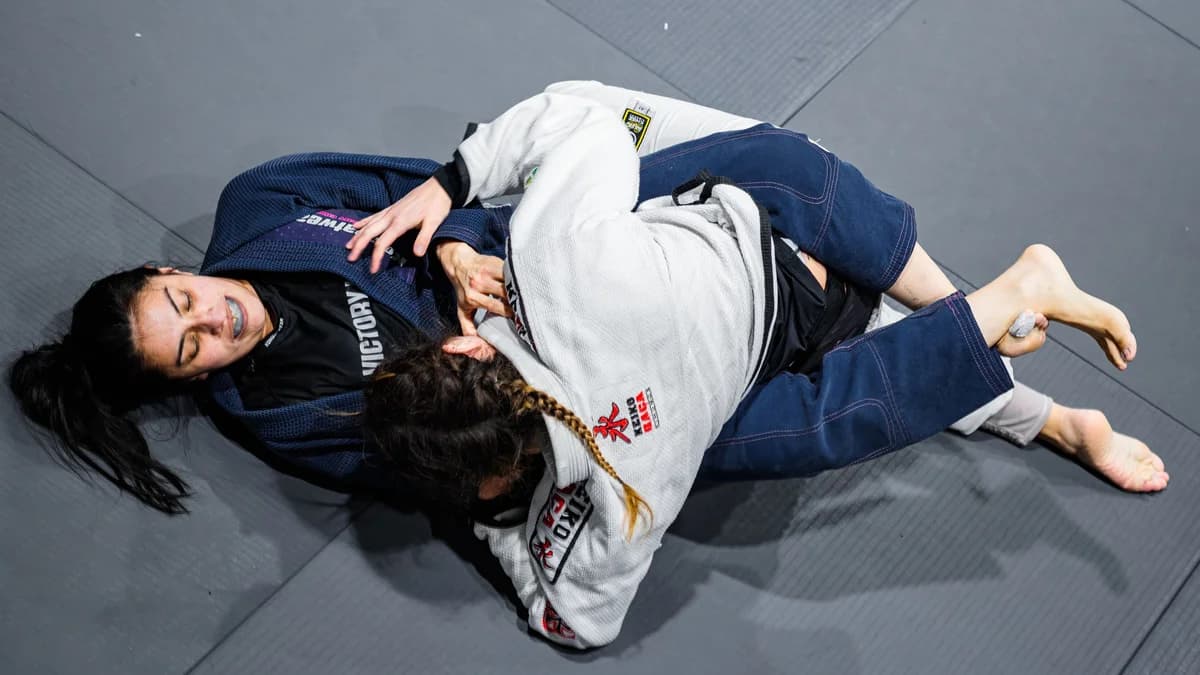
The Americana is one of the first submissions taught in BJJ and one of the most reliable from top positions. Understanding it — both how to apply it and how to escape it — is fundamental at every level of the sport.
What Is the Americana?
The Americana (also called the "paint brush," the "figure-four," or "ude-garami" in judo) is a shoulder lock that rotates the upper arm outward while the forearm is bent, creating torque on the shoulder and elbow joint. It's the opposite rotational direction from the Kimura.
Applied correctly, it forces a tap via shoulder pain and the threat of joint damage.
Americana vs. Kimura: What's the Difference?
Both submissions use a figure-four grip on the opponent's arm. The key difference is direction:
| Americana | Kimura | |
|---|---|---|
| Wrist position | Points toward opponent's head | Points toward opponent's feet |
| Rotation | Arm rotates outward (external rotation) | Arm rotates behind the back (internal rotation) |
| Typical position | Mount, side control (top) | Guard, side control, turtle |
A simple way to remember: if you're on top and the opponent's hand points up toward their head, you're setting up an Americana (the "upper" keylock). If their hand points down toward their hips, you're setting up a Kimura (the "lower" keylock).
How the Americana Works Mechanically
The submission creates a lever using the forearm as the lever arm and the shoulder joint as the fulcrum. When you:
- Pin the opponent's wrist to the mat
- Thread your arm under their upper arm and grip your own wrist
- Lift their elbow while keeping their wrist pinned
...the result is that the shoulder is forced into external rotation beyond its natural range of motion. The tap comes from shoulder pain, elbow pressure, or both.
Key Setup: From Mount
The mount Americana is the most common version:
- In a high mount, control one of your opponent's arms — wait for them to place it flat on the mat or create the opportunity by pushing their arm down
- Pin their wrist to the mat with your near hand
- Thread your other arm under their upper arm (between their arm and the mat)
- Grip your own wrist (figure-four grip)
- Slide their wrist down toward their hips while lifting their elbow — keep the back of their hand on the mat, like a paintbrush painting an arc
- Apply gradual pressure until they tap
The key technical point: the wrist must stay pinned to the mat throughout the movement. If you lift the wrist instead of the elbow, the submission loses its mechanical advantage.
Key Setup: From Side Control
From side control, the Americana attacks the far arm — the one opponents often use to push on your face or neck:
- Keep heavy chest pressure and control their far wrist as it comes up
- Pin that wrist to the mat with your head-side hand, their palm facing up and fingers pointing toward their head
- Thread your other arm under their upper arm and grip your own wrist (figure-four)
- Complete the same paintbrush motion — slide the wrist toward their hips, elbow up, wrist pinned
From side control, you can also transition to the Kimura if the opponent defends by bringing their hand down toward their hips.
Common Mistakes
Lifting the wrist instead of the elbow: This kills the mechanical advantage. The wrist stays down; the elbow goes up.
Poor grips: A weak figure-four grip allows the opponent to pull their arm free. Make sure the grip is locked and your elbows are tight.
Leaving space at the shoulder: If your arm is far from their shoulder when threading, the submission is weak. Keep your arm close to their body.
Rushing the finish: Jerking the submission fast creates injury risk without necessarily increasing tap rate. Apply smoothly and build pressure.
Defending and Escaping the Americana
Prevention — protect your arms: When mounted or in bottom side control, keep your arms tight to your body or connected together. Isolated flat arms are the primary setup opportunity.
Grip the belt or pants: Once caught, immediately grab your own belt, pants, or the opponent's clothing to prevent the rotation. This stalls the submission and buys time to escape.
Elbow to hip: Drive your trapped elbow toward their hip. This takes the angle away from the submission and creates space to roll or escape.
Roll toward the submission: Rolling in the direction of the shoulder lock (toward the tapping arm side) removes the torque and allows you to scramble.
Americana as a Combination Tool
At higher levels, the Americana rarely finishes on its own against a skilled opponent who knows the defenses. Its value lies in its combination potential:
- Americana → Kimura: If they pull their hand down toward their hips to defend, switch to Kimura
- Americana → armbar: If they straighten their arm to escape, transition to an armbar
- Americana → back take: If they roll away from the submission, follow and take the back
Frequently Asked Questions
What is the Americana submission in BJJ?
The Americana (also called the figure-four or ude-garami in judo) is a shoulder lock applied from top positions — typically mount or side control. It rotates the upper arm outward while the forearm is bent, creating torque on the shoulder joint beyond its natural range of motion and forcing a tap from shoulder pain.
What is the difference between the Americana and the Kimura?
Both use a figure-four grip but rotate in opposite directions. The Americana starts with the opponent's hand pointing toward their head and rotates the arm outward, sliding the hand toward their hips (external rotation). The Kimura starts with the hand pointing toward their feet and rotates the arm behind their back (internal rotation). They chain naturally into each other — defending one often exposes the other.
Why does the Americana fail when you lift the wrist?
The Americana works by pinning the wrist to the mat and lifting the elbow — this creates a lever using the forearm. If you lift the wrist instead, you break the lever and the shoulder is no longer forced into rotation beyond its range. The wrist stays down; the elbow goes up.
How do you escape the Americana in BJJ?
The primary escape is gripping your own belt, pants, or the attacker's gi as soon as the grip is established — preventing the rotation before it starts. From there, drive your trapped elbow toward their hip (removing the angle) or roll toward the submission to create a scramble.
Is the Americana effective against experienced BJJ practitioners?
The submission itself becomes harder to finish as opponents know the defenses, but its combination potential makes it valuable at every level. The standard chains — Americana to Kimura, to armbar, to back take — mean that an experienced opponent's defensive reactions create other submission opportunities.
Understanding these chains is what separates a practitioner who "knows the Americana" from one who uses it effectively as part of a complete offensive system.