

How Long Does It Take to Get a Black Belt in BJJ?
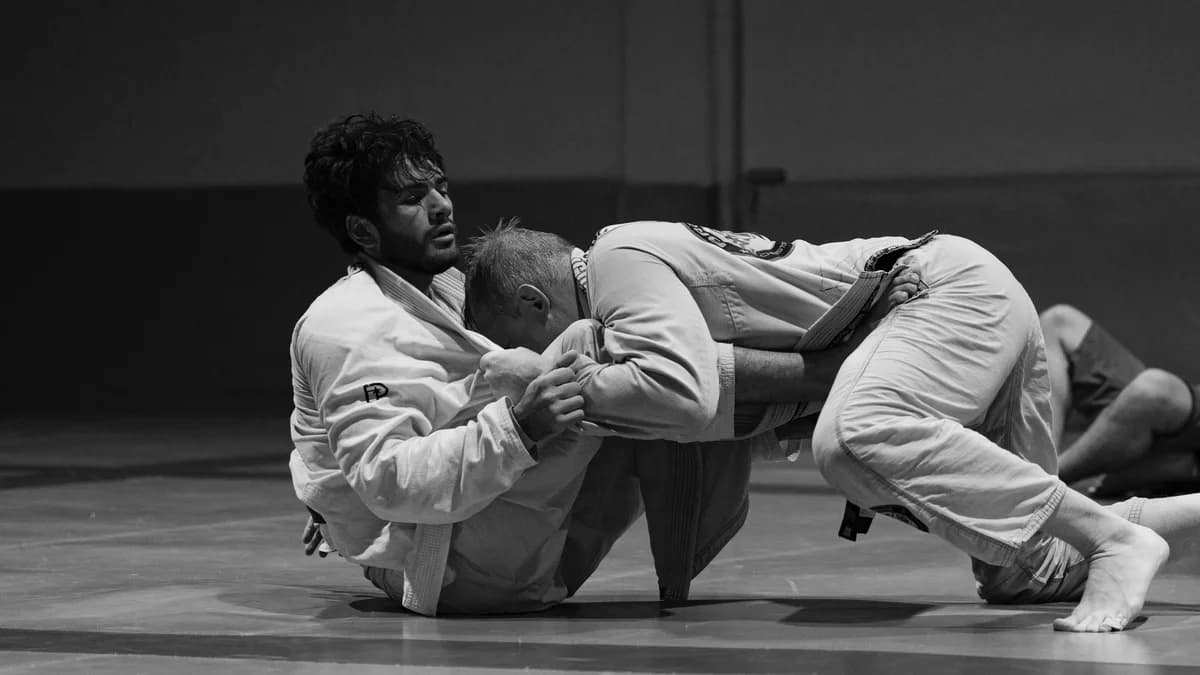
Brazilian Jiu-Jitsu black belt is widely considered one of the hardest ranks to earn in any martial art. The honest answer to how long it takes: most adults need 8 to 12 years of consistent training. Some get there faster; many take longer. Here's what actually determines your timeline.
The Average Timeline
For an adult who starts with no grappling background and trains consistently (3–5 sessions per week):
| Belt | Typical Time at Rank |
|---|---|
| White | 1–2 years |
| Blue | 2–4 years |
| Purple | 1.5–3 years |
| Brown | 1–2 years |
| Total to black belt | 8–12 years |
This assumes consistent training without major gaps. Life happens — injuries, work, family — and most people's actual journeys involve breaks. Accounting for real-world interruptions, 10–15 years is common.
IBJJF Minimum Time Requirements
The IBJJF sets minimum time requirements at each belt before promotion is allowed:
- Blue belt: minimum 2 years (minimum age 16)
- Purple belt: minimum 1.5 years (minimum age 16)
- Brown belt: minimum 1 year (minimum age 18)
- Black belt: minimum 1 year at brown (minimum age 19, or 18 for an Adult World Champion at brown belt)
Under IBJJF rules, the absolute fastest possible path to black belt is approximately 5.5 years — white to blue at 16, then minimums at each subsequent rank. This theoretical minimum has been approached by a handful of elite competitors, but it is genuinely exceptional.
What Speeds Up Progression
Training frequency: This is the single biggest factor. Someone training 5 days a week will typically progress significantly faster than someone training twice a week, all else being equal. Mat time compounds.
Prior grappling background: Wrestlers, judoka, and sambo practitioners often progress faster through the early belts because many fundamental concepts — base, grips, takedowns — translate directly.
Competition experience: Competing accelerates learning in ways that regular training does not. The pressure of a match reveals weaknesses that are easy to hide in a friendly gym environment. Many instructors weight competition performance heavily in promotion decisions.
Quality of instruction and training partners: Training at a high-level academy with experienced partners provides better feedback and more varied challenges.
Youth: Younger practitioners (late teens and early twenties) often progress faster due to physical adaptability and the ability to train through minor injuries.
What Slows Progression
Training gaps: Injuries, travel, and life circumstances cause most people's journeys to have extended pauses. A two-year gap resets some muscle memory and physical conditioning, even if conceptual understanding is retained.
Not competing: Some people train for years without ever competing. Competition is not required for promotion at most academies, but instructors who emphasize it may promote slower without it.
Training at a gym with no culture of sparring (drilling only): Technique without live rolling does not develop the same skills. Academies that have high drilling ratios and limited sparring may produce technically informed but practically underdeveloped practitioners.
Sandbagging: Some practitioners deliberately avoid promotion or stay at a given rank longer to accumulate competition wins. This is controversial, and most reputable instructors don't encourage it.
The Black Belt Is Not the End
One persistent misconception is that black belt means you've mastered BJJ. In reality, the art is deep enough that many black belts describe their promotion as the moment they felt ready to truly start learning.
Black belt degrees (1st through 6th, awarded roughly every three years) represent decades of continued development. The highest degrees — coral belts and red belt — require 40+ years of contribution to the art. For a full breakdown of every rank, stripe, and degree, see the BJJ belt system guide.
Is BJJ Really Harder to Earn Than Other Martial Arts?
Yes, compared to most systems. A black belt in many traditional martial arts can be earned in 3–5 years. BJJ's combination of live sparring (where rank must be backed up by actual ability), minimal standardization, and the emphasis on individual instructor judgment makes it considerably harder to inflate.
This is widely seen as a feature, not a bug — a BJJ black belt means something precisely because it's difficult to earn.
Frequently Asked Questions
How long does it take to get a black belt in BJJ?
Most adults who train consistently (3–5 sessions per week) reach black belt in 8–12 years. Accounting for the real-world interruptions most people experience — injuries, travel, work — 10–15 years is common.
What is the fastest possible path to a BJJ black belt?
Under IBJJF rules, the absolute minimum is approximately 5.5 years — receiving blue belt at 16, then meeting the minimum time requirements at each subsequent rank. This has been approached by a handful of elite competitors and is genuinely exceptional.
Do you have to compete to get a black belt in BJJ?
No — competition is not required at most academies. However, many instructors weight competition performance heavily in promotion decisions, and practitioners who compete regularly tend to progress faster.
Does training frequency affect how fast you get promoted?
Yes, it is the single biggest factor. Someone training five days a week will typically progress significantly faster than someone training twice a week, all else being equal. Mat time compounds over time.
Can you get a BJJ black belt faster with a wrestling or judo background?
Yes. Wrestlers, judoka, and sambo practitioners often move through the early belts faster because many foundational concepts — base, grips, takedowns — transfer directly. Prior grappling experience is one of the most consistent accelerators.
What is a BJJ black belt degree?
After receiving a black belt, practitioners earn degrees (1st through 6th) over time. Degrees are awarded roughly every three years under the IBJJF system. The highest ranks — coral belts and red belt — require 40 or more years of contribution to the art.
What Should You Focus On?
If your goal is black belt, the most reliable approach is simple: train consistently, compete regularly, and stop worrying about promotion. Every good instructor notices who shows up, who works hard, and who improves. Promotions follow from that, on their own timeline.
The practitioners who try to optimize for faster promotion — chasing stripes, switching academies, gaming systems — almost universally get worse results than those who just commit to improving.