

BJJ for Beginners: What to Expect in Your First Year
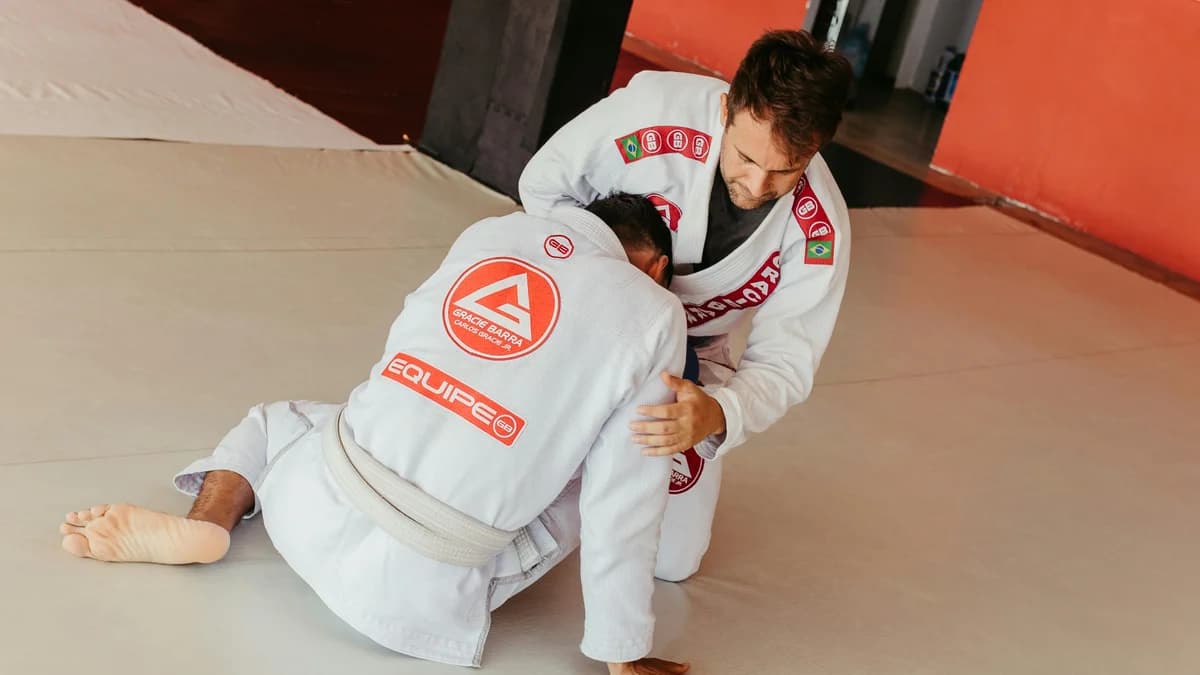
Starting Brazilian Jiu-Jitsu is exciting and humbling in equal measure. The first year is a specific experience that almost every BJJ practitioner looks back on with a mix of frustration and nostalgia. Here's what to actually expect — no sugar-coating — and how to make the most of it.
The First Few Months: Controlled Chaos
For most beginners, the first 2–3 months of BJJ feel completely overwhelming. You are being tapped by people who seem to barely be trying. You don't know where your arms and legs are supposed to go. You gas out in the first five minutes of sparring.
This is universal. Every black belt went through it.
What's happening underneath the frustration is important: your brain is building entirely new motor patterns. BJJ movement is unlike everyday movement — the angles, the weight distribution, the concept of shrimping, bridging, and framing are genuinely foreign. The disorientation is the learning process working.
The most important thing you can do in the first few months: show up consistently. More than anything else, frequency in the early months accelerates the transition from chaos to competence.
What You'll Learn First
Most academies structure beginner curriculum around the same fundamental positions:
Escapes first: Upa (bridge-and-roll from mount), elbow-knee escape (from mount), hip escape/shrimp (from side control), standing up in base. Learning to escape bad positions is prioritized because you'll spend a lot of time there as a beginner.
Basic positions: Mount, side control, back control (with hooks), closed guard. Understanding what each position means — who has advantage and why — is a conceptual foundation.
Entry-level submissions: Rear naked choke (from back control), armbar (from mount or guard), triangle choke (from guard), Kimura. These form the core of a beginner's offensive game.
Guard play: Closed guard fundamentals — breaking posture, hip movement, sweeps (scissor sweep, hip bump sweep), and submission setups.
Sparring (Rolling)
Most academies introduce live sparring within the first few weeks. This is one of BJJ's defining features — you test your techniques against a resisting partner regularly from very early in your training.
Early sparring will be frustrating. Expect to tap constantly. This is how it's supposed to work — tapping is how you learn. There is no shame in it, and the practitioners who resist tapping (ego-tapping, holding out) consistently progress more slowly than those who tap quickly and reset.
A few sparring principles for beginners:
- Tap early. Better to tap and reset than to injure yourself defending something you've already lost.
- Communicate with your partner. A quick "I'm new" before a round usually results in a more educational experience.
- Focus on positions, not submissions. Trying to submit people before you understand positional control usually results in chaotic scrambles. Prioritize getting and maintaining dominant positions first.
Common Beginner Mistakes
Muscling through techniques: Trying to make techniques work with strength rather than leverage. This delays learning because you're compensating for technical errors instead of fixing them.
Watching YouTube instead of drilling: No amount of watching BJJ content replaces mat time. Watch to supplement training, not replace it.
Comparing progress to others: People progress at different rates. Someone who trained wrestling for years will advance faster at white belt. Someone who trains 5x per week will advance faster than someone training twice. Your timeline is your own.
Neglecting defense: Many beginners want to learn attacking techniques and ignore defensive fundamentals. This is backwards. Defense and escapes are the foundation everything else builds on.
Not asking questions: Most instructors welcome questions before or after class. If something isn't making sense, ask.
Dealing with the Physical Reality
BJJ is physically demanding and produces some soreness, particularly in the neck, shoulders, and fingers. This is normal and typically reduces as your body adapts over the first few months.
Injuries are a part of long-term BJJ training, but serious injuries are not inevitable if you:
- Tap before it's too late on submissions
- Don't train through significant pain
- Warm up properly
- Communicate with training partners about injuries
Finger joint soreness and swelling is particularly common — many practitioners tape their fingers as a precaution.
Your First Year Goals
By the end of one year of consistent training, a reasonable beginner should:
- Survive rolls against other beginners with some regularity
- Have a basic offensive game (2–3 reliable submissions)
- Understand the fundamental positions and basic escapes from each
- Have some sense of a preferred guard style
- Have competed at least once (ideally — though not required)
Many practitioners get promoted to blue belt within their first year; others take longer. The belt will come when it comes. Focus on the above, and promotion takes care of itself. For a full breakdown of what each belt represents and the IBJJF time requirements, see the BJJ belt system guide.
Frequently Asked Questions
Is it normal to get tapped out constantly as a BJJ beginner?
Yes — completely normal. Getting submitted frequently in the early months is universal. Every black belt went through the same experience. Tapping quickly and resetting is how you learn; practitioners who resist tapping out of ego consistently progress more slowly.
How often should a BJJ beginner train?
Two to three times per week is a good starting point. It gives your body time to recover while keeping the learning momentum going. Training more frequently accelerates progress, but consistency over months matters more than any single week's volume.
How long before a BJJ beginner gets their blue belt?
Most beginners receive their blue belt somewhere between one and two years of consistent training, though some take longer. Belt promotion is entirely at the instructor's discretion and is based on overall development, not a fixed schedule.
Should BJJ beginners compete?
Competing at least once in your first year is highly recommended, though not required. Competition reveals weaknesses that are easy to hide in friendly gym sparring and accelerates your development in ways that regular training alone cannot replicate.
What should a BJJ beginner focus on first?
Escapes and defense. Most beginners want to attack, but learning to escape bad positions — mount, side control, back control — is the foundation everything else builds on. A strong defensive base makes your offensive game safer to develop.
How long does the overwhelmed feeling last in BJJ?
For most beginners, the initial chaos starts to settle after two to three months of consistent training. You won't feel competent yet, but positions will start making sense and your survival rate in sparring will improve noticeably.
The Most Important Thing
Every black belt was a white belt who didn't quit. The single biggest factor in your long-term success in BJJ is simply continuing to show up. Consistency over years is what produces competence — not any particular technique, not any specific training method.
If you're curious about the long road ahead, how long it actually takes to reach black belt is worth reading once the initial chaos settles.
Show up. Tap. Learn. Repeat.